
Every export carton that arrives with a crushed corner, a torn wrap or a collapsed pallet tells the same story: the load was never properly protected on the edges. Paper edge protectors are the cheapest insurance in the entire packaging chain — and the fastest way to produce them at scale is a full automatic paper angle edge board protector.
This guide explains exactly how paper edge protectors are made, what happens inside a full automatic line, and how to choose a machine that pays for itself within the first year of running.
What Is a Paper Edge Protector?
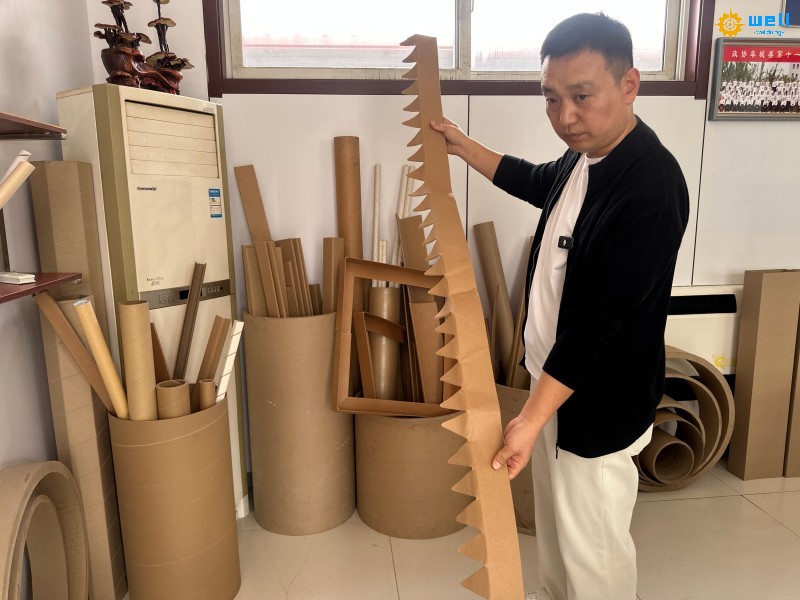
A paper edge protector — also called an edge board, corner board or corner protector — is a right-angled strip of laminated paperboard that wraps the edges and corners of a palletized load, a carton or a bundled product. It absorbs impact from forklift tines, strapping tension and stacking pressure, so the product reaches the customer in the same condition it left the factory.
Three formats dominate the market:
- V-shaped edge protectors — folded from single-wall or double-wall board, used for light cartons and inner packing.
- L-shaped corner boards — the classic pallet accessory, usually 3–6 mm thick, with legs of 30–75 mm.
- Honeycomb / tubular edge protectors — high-compression structures for heavy coils, steel sheet, glass and furniture.
All three share one production logic: paper is formed into a continuous profile, glued, cut to length and stacked. The difference between a workshop and a factory is whether that logic runs automatically.
How Paper Edge Protectors Are Made: The Core Process
Regardless of the profile, the manufacturing chain has six stages.
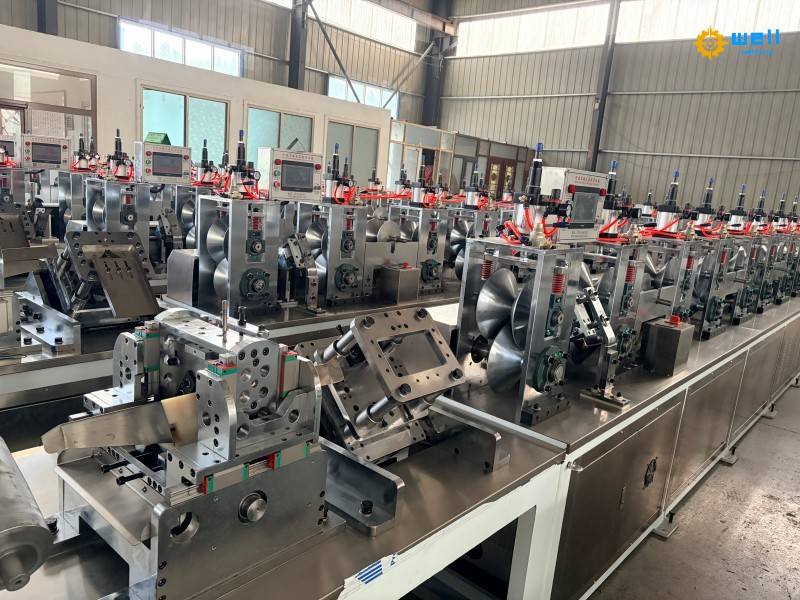
1. Paper feeding and slitting. Multiple rolls of recycled kraft paper or testliner are unwound, tensioned and slit to the required web width. A full automatic paper edge protector machine handles 4–12 rolls simultaneously with hydraulic shaftless unwinding, so roll changes take minutes instead of hours.
2. Gluing and lamination. The plies pass a glue applicator where starch adhesive or cold glue is applied in a controlled film. Glue weight, not glue volume, determines both strength and drying time — a modern line meters the film to ±2 g/m².
3. Forming and pressing. The laminated web enters a forming section where rollers or a die set fold it into V, L or U profile. Pressure rollers then compact the plies, driving out air pockets that would otherwise become weak points.
4. Drying and curing. Depending on speed, the profile passes an infrared, hot-air or high-frequency drying tunnel. Curing is the bottleneck in most manual operations; automatic lines solve it with temperature zones rather than floor space.
5. Cutting to length. A servo-driven flying cutter slices the continuous profile into 500–2000 mm lengths, with tolerance typically ±1 mm. Rotary shear cutting keeps the edge clean, which matters for automated pallet wrappers downstream.
6. Counting, stacking and bundling. Finished protectors are counted, squared into bundles of 50–200 pieces, tied or shrink-wrapped, then transferred to a pallet. This is the stage where labor cost usually hides — and where automation delivers the biggest saving.
Manual vs Semi-Automatic vs Full Automatic: The Real Difference
Most buyers start with a semi-automatic line and regret it six months later. Here is the honest comparison.
Manual / workshop production. Two to four workers feed paper, glue, fold and cut by hand. Output is roughly 500–1500 pieces per shift. Thickness varies between batches, glue consumption is uncontrolled, and skilled operators are hard to retain.
Semi-automatic line. Forming and cutting are powered, but feeding, stacking and bundling remain manual. Output rises to 3000–6000 pieces per shift with three operators. Quality improves, but the labor curve still scales with volume.
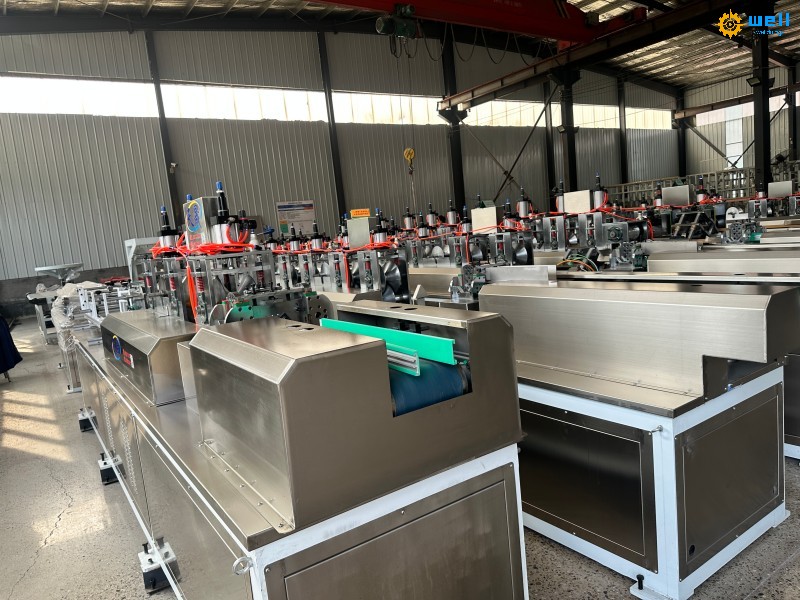
Full automatic paper edge protector machine. One operator supervises from an HMI touch screen. Unwinding, gluing, forming, drying, cutting, counting, stacking and bundling run in one continuous flow. Output reaches 10,000–25,000 pieces per shift depending on profile and thickness, with scrap below 1.5%.
The economic gap is not the machine price — it is the cost per thousand pieces. At a typical labor rate, a full automatic line overtakes a semi-automatic one within 8–14 months of two-shift operation.
Inside a Full Automatic Paper Edge Protector Machine
Understanding the modules helps you compare quotations, because two machines sold at the same price can differ by three subsystems.
Shaftless hydraulic unwinder. Accepts mill rolls up to 1500 mm diameter without core damage, with automatic tension and roll-end detection. This alone removes 30–40 minutes of downtime per roll change.
Precision glue unit. Twin-roll or doctor-blade metering with a recirculating glue system. A closed-loop sensor keeps film weight constant even when line speed changes, which is the single biggest factor in consistent board strength.
Forming and press section. Hard-chromed rollers, adjustable angle from 60° to 120°, and quick-change die sets for V, L and U profiles. Changeover should be under 20 minutes without tools.
Multi-zone drying tunnel. Independent temperature control per zone, insulated chamber, and exhaust management. Energy consumption is the second-largest running cost after paper, so look for heat recovery.
Servo flying cutter. Programmable length from 300 to 2500 mm, rotary blade with auto-sharpening, and a reject gate for out-of-tolerance pieces. Servo control is what allows one machine to switch between pallet boards and short corner protectors in a single production order.
Automatic stacker and bundler. Belt or chain stacker with photoelectric counting, squaring device and optional strapping or shrink film. Without this module, “automatic” is only half true — you still need two people at the discharge end.
PLC + HMI control cabinet. Recipe storage, fault diagnostics, remote access and production counters. Siemens, Schneider or Delta platforms are common; ask for the exact brand in writing.
Technical Specifications of a Typical Full Automatic Line
Buyers comparing suppliers need a common reference frame. A mainstream configuration for pallet-grade corner boards looks like this:
- Paper roll width: 300–1400 mm, 4–8 rolls
- Production speed: 15–40 m/min (profile dependent)
- Board thickness: 2–10 mm, multi-ply up to 12 plies
- Protector length: 300–2500 mm, servo programmable
- Forming angle: 60°–120°, quick-change dies
- Drying: 3–5 independent temperature zones
- Control: PLC with 10-inch colour HMI, recipe memory
- Total power: 45–90 kW
- Air consumption: 0.6–0.8 MPa, dry air
- Operator requirement: 1–2 per shift
- Overall footprint: approximately 25 × 4 m
Numbers should always be verified with a witnessed trial run on your own paper grade — recycled testliner behaves differently from virgin kraft, and glue absorption changes accordingly.
Why Automate: Six Measurable Benefits
1. Labor cost collapses. One operator replaces three to five. In markets with rising wages, this is the decisive argument.
2. Yield goes up, waste goes down. Automatic tension and glue metering cut paper waste from 6–9% to under 2%. On a line consuming 800 tonnes of paper annually, that is a five-figure saving in material alone.
3. Quality becomes repeatable. Thickness tolerance, angle accuracy and cut length no longer depend on who is on shift. This matters when your protectors feed an automated pallet wrapper or a strapping line.
4. Output matches export deadlines. A peak season order of 200,000 pieces is a scheduling problem on manual equipment and a two-week job on an automatic line.
5. Energy and glue per piece fall. Continuous operation at stable speed uses less power per tonne than repeated manual start-stop cycles.
6. One machine, multiple products. Recipe-driven changeover lets a single paper edge protector machine produce V-boards, corner boards, honeycomb protectors and even paper corner tubes for furniture packaging — widening your product catalogue without a second capital investment.
Where These Machines Earn Their Money
The demand side is broader than most newcomers expect.
- Export pallet protection. Electronics, machinery, ceramics and glass all require edge reinforcement to survive container handling.
- Furniture and panel board. Corner protectors prevent veneer damage during transport and storage.
- Steel coil and aluminium sheet. High-compression honeycomb profiles replace wooden crating.
- Appliance and white goods. L-shaped boards protect cabinet corners in mixed pallet loads.
- E-commerce fulfillment. Small V-boards inside cartons reduce damage claims and returns.
- Agriculture and fresh produce. Water-resistant coated protectors support heavy fruit crates.
- Printing and paper converting. Edge boards protect reams and rolls in transit.
If you already buy edge protectors from a converter at a fixed price per thousand, the calculation is straightforward: compare your annual purchase volume against the machine’s cost per thousand including paper, glue, power, labor and depreciation. Most converters and large exporters find break-even between 600,000 and 1,200,000 pieces annually.
How To Choose the Right Machine: A Buyer’s Checklist
Price is the last question, not the first. Work through these in order.
Profile and size range. Decide the maximum and minimum protector dimensions you will sell in the next five years, not just this year. Retrofitting a wider former is expensive.
Paper grades you will actually run. Recycled testliner, kraft, coated white board and honeycomb cores all behave differently. Ask the supplier to demonstrate with your material.
Speed versus stability. A 40 m/min line that runs continuously beats a 60 m/min line that stops for jams. Ask for the realistic sustained speed, not the catalogue peak.
Automation depth at the discharge end. Confirm whether stacking, counting and bundling are included, or sold as options. This is where quotations diverge most.
Glue system quality. Look at the metering method and whether film weight is closed-loop controlled. Cheap glue units cost more in paper waste.
Drying capacity. Undersized tunnels force you to slow down, wasting the machine’s rated speed. Match drying to your climate and paper grade.
Spare parts and service response. Ask for the parts list with prices, the warranty terms and the average engineer dispatch time to your country. A machine is only as good as its support.
Certification and safety. CE or equivalent guarding, emergency stops, interlocked doors and clear electrical documentation are non-negotiable for export markets.
Reference customers. Speak to two buyers running the same model on similar paper for at least a year. Their waste figures will tell you more than any brochure.
Total cost of ownership. Include installation, training, freight, duties, foundation work, compressed air and power upgrades. The cheapest quotation often loses on TCO.
Installation, Commissioning and Operator Training
A full automatic line arrives in several containers and needs a level floor, stable power and a dry compressed-air supply. Realistic timelines:
- Foundation and utilities preparation: 2–3 weeks
- Mechanical and electrical installation: 7–12 days with a supplier engineer
- Commissioning and trial production: 3–5 days
- Operator training and recipe building: 3 days
- Stable production at rated output: typically 2–4 weeks after commissioning
Insist on a written acceptance test: sustained speed, thickness tolerance, cut-length accuracy, waste rate and pieces per shift, all measured on your paper.
Maintenance That Keeps Uptime Above 90%
Automatic does not mean maintenance-free. A simple routine protects the investment:
- Daily: clean glue rollers, check blade condition, verify tension sensors, inspect stacker alignment.
- Weekly: lubricate chains and bearings, check belt tracking, clean drying tunnel filters.
- Monthly: calibrate glue film weight, inspect hydraulic oil, test all safety interlocks.
- Yearly: replace wear parts as scheduled, review electrical connections, update PLC backups.
Keep a spare set of cutter blades, glue rollers, photoelectric sensors and belts on site. Those four items account for most unplanned stoppages.
Frequently Asked Questions
How many paper edge protectors can a full automatic machine produce per hour? A typical line running corner boards at 25 m/min with 1000 mm length produces roughly 1,400–1,500 pieces per hour, or 11,000–12,000 per eight-hour shift. Short V-boards can exceed 2,500 pieces per hour.
What paper thickness and ply count are possible? Standard configurations handle 2–10 mm finished thickness with up to 12 plies, using 100–250 g/m² paper per ply depending on the strength target.
Can one machine make both V-shaped and L-shaped protectors? Yes, with quick-change forming dies. Changeover is normally 15–20 minutes and recipes are stored in the PLC.
How much floor space is required? Plan for approximately 25 × 4 m for the main line, plus 6 × 4 m for paper roll storage and finished-goods staging.
What is the typical power requirement? 45–90 kW installed capacity depending on line length, drying zones and automation level, running at 380–440 V three-phase.
How long is delivery and installation? Standard models usually ship in 45–75 days; custom widths and special profiles take longer. Installation and commissioning add roughly two to three weeks on site.
Is a full automatic line worthwhile for a small converter? Only above a certain volume. Below roughly 500,000 pieces annually, a semi-automatic line usually offers a better return; above one million, automation wins clearly.
Final Thoughts
Paper edge protectors look like a commodity, but the margin lives in how efficiently you make them. A full automatic paper corner board making machine turns a labor-heavy, quality-variable process into a repeatable production line: one operator, stable thickness, minimal waste, and output that scales with your order book instead of your headcount.
Before you commit, define your profile range, test the line on your own paper, confirm the automation depth at the discharge end, and calculate cost per thousand rather than price per machine. Do that, and the equipment decision becomes an easy one — the numbers make it for you.
If you need a configuration proposal, a witnessed trial or a cost-per-thousand calculation based on your annual volume, contact our engineering team with your protector sizes and paper grades — we will size the line to your real production, not to a catalogue page.
Email:cartonmachine.tomwang@aliyun.com
Phone/Wechat/Whatsapp:+86 133 0307 8975
Post time: Nov-09-2026