

Most buyers judge an paper angle edge board protector by its top speed. That number is almost useless. A machine rated at 60 m/min that stops for 40 minutes every time the order changes will lose to a machine rated at 45 m/min that changes size in four minutes flat. When your order book is full of small runs, short runs and mixed sizes, changeover time is the real production rate. This article walks through what actually happens during a size change on a Welldoing paper edge board making machine, minute by minute, and then puts a number on it.
The number that never appears on the spec sheet
Ask a supplier for maximum speed, glue consumption, paper width range, and you will get a clean table. Ask how long a size change takes end to end, including the scrap board produced while the machine settles, and the table usually goes quiet. That silence is expensive. On a machine that suits short runs, changeover is not a maintenance detail. It is the feature that decides how many orders you can accept in a week, how much paper you throw away, and whether your operator finishes the shift calm or covered in glue.
Changeover speed is a design decision made long before the steel is cut.
What a size change on an edge board machine really is
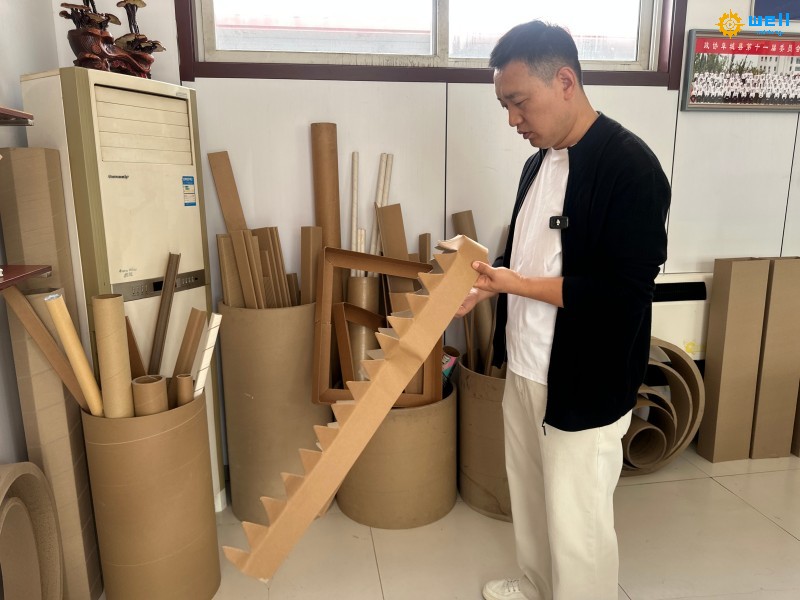
An edge board making machine turns flat paperboard into the L-shaped, V-shaped or U-shaped profile that protects pallet edges, furniture corners, and stacked cartons. Size means four things at once: the width of the paper strip, the thickness of the board plies, the leg length of the profile, and the angle. A size change touches all four, and each one has its own mechanical weak point.
Step 1: The paper feed and slitting set
The strip width has to change first. On a slow machine, this means lifting off the slitting blades, hunting for the right spacers, re-shimming the shaft, and re-threading the paper. Every re-thread is an opportunity for a diagonal run, a torn edge, and a paper jam two minutes later. Tool-free spacer systems and a printed width scale on the shaft cut this step down, because the operator sets the position by number instead of by feel.
Step 2: The glue station
Glue is where changeovers quietly bleed money. Different board thicknesses need different glue film weights, and the applicator roll gap has to follow. If adjusting the gap means loosening three bolts and testing on scrap, the operator will simply skip the adjustment. The result is a board that is over-glued, wavy, and slow to dry. A machine with a calibrated, hand-wheel adjuster and a visible scale lets the glue film be set in seconds and repeated later.
Step 3: The forming and creasing section
This is the heart of the profile. The creasing rolls that put the fold line into the board must align with the new leg length, and the forming shoes must close to the new angle. On older designs, the whole forming block is a single rigid assembly, so a new size means swapping the block. On quick-change designs, the shoes and rolls are mounted on independent slides with locking handles; the operator moves them along a scale, locks, and checks one sample.
Step 4: The cutting head and the counter
Finally, the cutting length and the stack count. Digital length setting on a servo cut-off removes the mechanical cam change entirely, and a recipe memory lets the operator recall the last run of the same size instead of rebuilding the setup from memory.
Four steps. On a good machine, they are four adjustments. On a poor machine, they are four rebuilds. That difference is the entire story.
Why older machines force a 40-minute stop
Not because the engineers were careless, but because those machines were designed in an era when one size ran for three days. Rigid forming blocks, bolted slitting spacers, and mechanical length cams were the cheapest way to hit accuracy targets, and they were accurate. They just cannot survive an order book that changes every four hours. Retrofitting is possible but partial: you can add a servo cut-off, you cannot easily make a bolted forming block tool-free. That is why, when small runs become the norm, replacing the machine usually costs less than nursing the old one.
The money math: what four minutes is actually worth
Here is an illustrative example. One line, two size changes per shift, two shifts, 300 days a year, so 1,200 changeovers. Suppose the old machine takes 40 minutes and the new one takes 8, including sample checking. That saves 32 minutes each time, which is 640 hours a year, or 80 working days at eight hours. At a modest contribution of USD 60 per machine hour, that is roughly USD 38,000 of recovered capacity, before counting the paper saved.
Then count the paper. Slow changeovers produce scrap while the operator tests and re-tests: perhaps 30 metres per changeover. At 1,200 changes a year, that is 36 km of board. Add the rework from glue that was never re-adjusted, and the cost of a rush order that had to be refused because the line was tied up. The savings on paper and rework often exceed the labour savings.
Four minutes is not a comfort feature. It is a capacity expansion that happens to arrive on a truck.
Five hidden costs slow changeover hides
Wasted operator skill. A talented operator spends the shift setting up instead of running. Schedule fragility. Every size change becomes a risk, so planners batch orders and hold extra stock to avoid them. Quality drift. Repeated adjustments mean the first fifty boards of each run sit at the edge of tolerance. Safety exposure. Bolted parts, spacers, and hand tools near a running line are where fingers get caught. Order loss. Buyers with mixed-size repeat orders gravitate to suppliers who can promise a fast switch without a minimum quantity penalty. All five are invisible in a quotation. All five appear in the annual accounts.
How the Welldoing configuration keeps a change under ten minutes
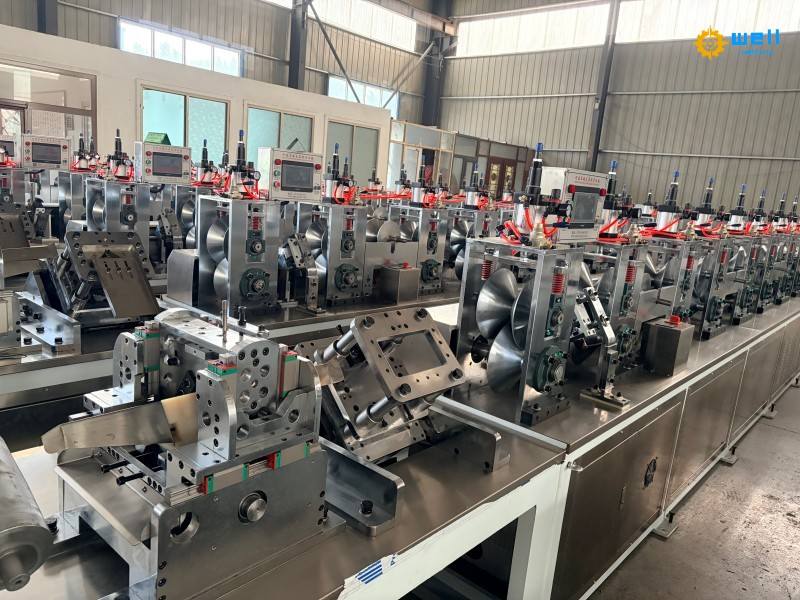
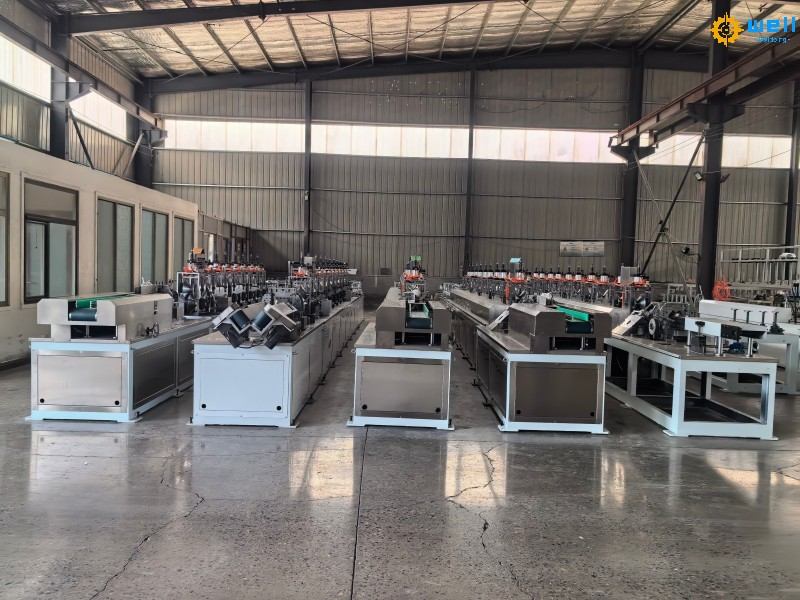
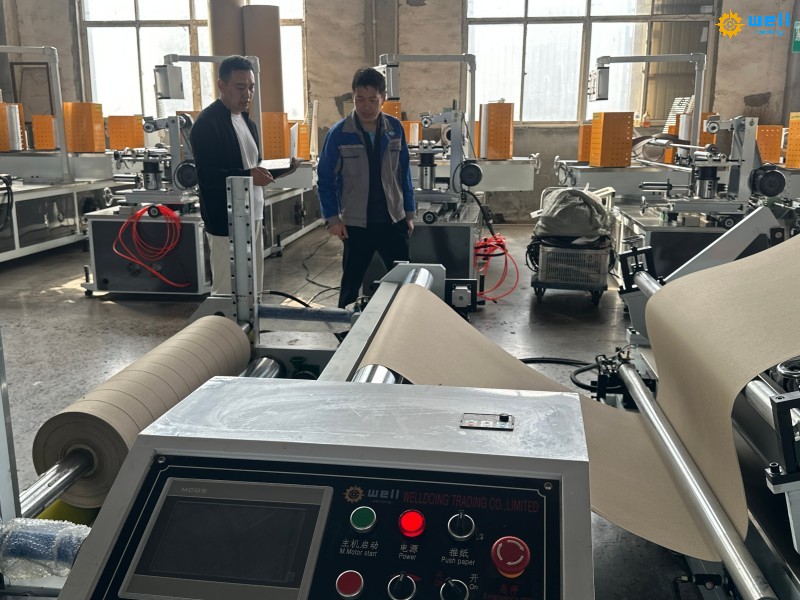
The Welldoing paper corner board making machine is built around the idea that a size change should be a setting, not a rebuild. The slitting shaft carries position-marked spacers so strip width is set by number. The glue applicator uses a calibrated hand-wheel with a readable scale, so film weight is repeatable rather than guessed. The forming section runs on independent slides with locking handles, letting leg length and angle be dialled in without swapping blocks. A servo cut-off takes the length digitally, and a recipe library stores each size so a repeat order is recalled at the touch of a screen.
The practical result: an operator can move from a 30 mm V-profile to a 50 mm L-profile, check one sample, and be back at full speed while the previous order is still being wrapped. On mixed-order days, that is the difference between finishing the schedule and renegotiating it.
What to ask before you buy any edge board making machine
Ask for a live demonstration of a size change, not a video. Ask which adjustments need a tool, and time each one yourself. Ask how much saleable board is produced during the change, and what happens to the rest. Ask whether the glue gap has a scale or a guess. Ask if the machine remembers the last setup for a given size. Ask the operator, not the sales manager, how long it took them to learn the changeover. A supplier who answers all six with a stopwatch is a supplier worth a second meeting.
FAQ
How long should a size change take on an edge board making machine? On a quick-change design, a trained operator should complete the adjustment and produce a passing sample in under ten minutes. Older rigid-block designs typically need thirty to fifty minutes, plus scrap.
Can a slow machine be upgraded instead of replaced? Partly. Digital cut-off and recipe memory can be retrofitted, but bolted slitting spacers and a single-piece forming block usually cannot become tool-free without a rebuild of that section. Compare the upgrade quote honestly against the cost of lost capacity.
Does fast changeover reduce accuracy? No, if the machine uses scales and locks rather than shims. Repeatability comes from positive stops, not from how long the operator spends tightening bolts.
Which profile sizes should a mixed-order plant prioritise? The three or four sizes that make up most of the order book, so the recipe library covers the volume, and rare sizes are treated as exceptions rather than defaults.
The takeaway
When you compare edge board making machines, put changeover time on the first line of your comparison sheet, above maximum speed. Then calculate what a stopped line costs you per hour, per shift, per year. The edge board making machine that wins on that line is usually the one that keeps running, not the one that runs fastest. Sizing the machine to your order book, rather than to a brochure, is the cheapest upgrade available.
Speak to Welldoing for a timed size-change demonstration on the profile sizes you actually sell.
Email:cartonmachine.tomwang@aliyun.com
Phone/Wechat/Whatsapp:+86 133 0307 8975
Post time: Nov-13-2026