

In export packaging, one of the most overlooked cost centers is corner damage. A carton that leaves the factory perfectly square can arrive at an overseas warehouse with crushed edges, torn layers, exposed product and a rejected claim. The fastest, cheapest and most reliable way to stop that from happening is a paper angle edge board protector — also called a pallet corner paper guard. This article explains what these paper corner protectors are, why they matter for export pallet packaging, how to specify the correct size, and why thousands of exporters have replaced plastic and wooden corner braces with recyclable paper edge protectors.
What Is a Paper Angle Edge Board Protector?
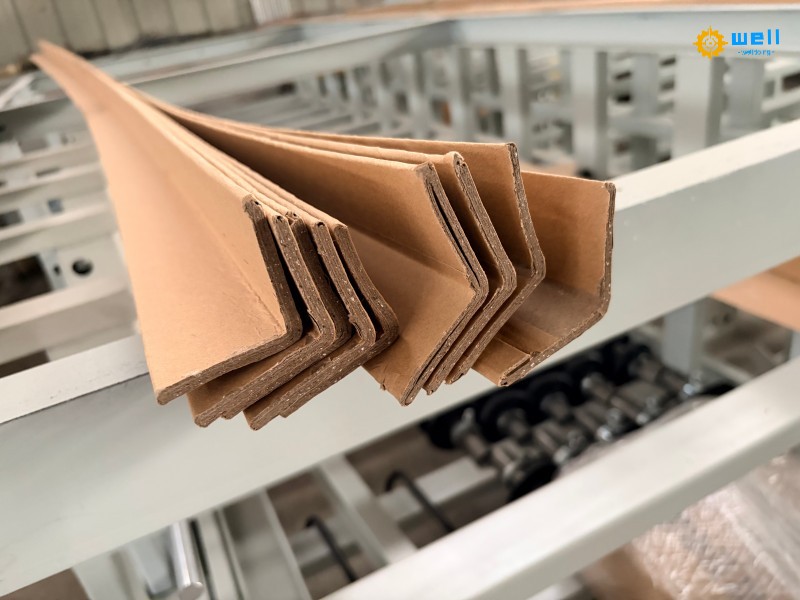
A paper angle edge board protector is an L-shaped profile made from multiple layers of high-strength kraft paper laminated and pressed into a rigid 90-degree corner piece. It is placed over the vertical edges of cartons, the corners of a pallet load, or the ends of bundled profiles, so that any external force — strapping tension, forklift contact, stacking pressure, vibration in a container — is absorbed by the paper angle board instead of the product.
Because it is built from paper rather than polymer or timber, this paper corner protector is fully recyclable, repulpable and free of any fumigation requirement. That single property makes the pallet corner paper guard the default protection choice for markets with strict packaging waste regulation, and for buyers who want to avoid plastic packaging taxes or phytosanitary paperwork altogether.
Why Pallet Corners Fail Without Protection
Understanding the failure mechanism explains why a thin paper angle guard works so well.
1. Strap cutting. PET strapping applied at high tension creates a knife-edge load. Without a paper edge protector machine between the strap and the carton, the strap cuts into the corrugated flute, splits the liner and collapses the stack. The angle board spreads the same tension over a wide, rigid surface.
2. Vertical crush. In a container, the bottom cartons carry the weight of the entire stack plus stacking during loading. The corner is the weakest point of any corrugated box because two flutes meet there. A heavy-duty paper angle edge board protector converts that point load into a distributed one.
3. Forklift and clamp impact. Pallet handling is the most common source of corner damage in the warehouse. A pallet corner paper guard placed on the four vertical corners of the load absorbs the impact and keeps the stretch film from being punctured.
4. Film creep and load shift. Stretch wrap alone allows loads to shift during transit. The angle guard adds mechanical rigidity to the corner, so the film holds tension and the pallet stays square.
5. Moisture and friction damage. Humid container environments soften corrugated board. The laminated kraft layers of a paper corner guard add a barrier layer that resists abrasion and slows moisture ingress at the most exposed point.
Product Construction and Material
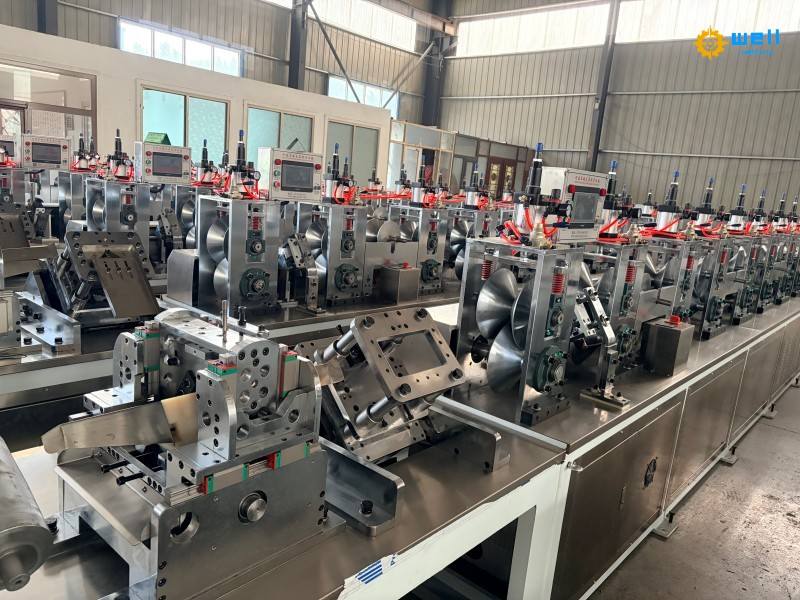
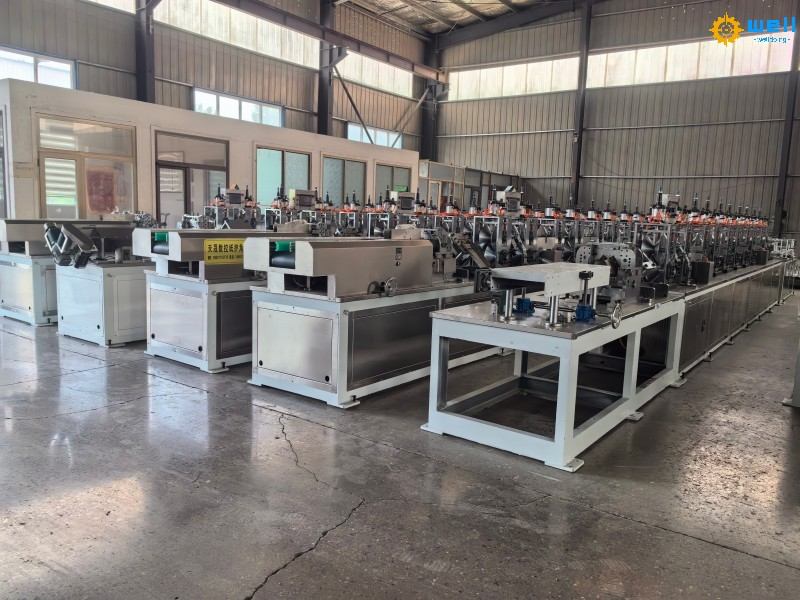
Our paper angle edge board protector is produced on a dedicated angle board line: multiple plies of virgin or recycled kraft paper are glued, formed into an exact 90-degree L profile, and pressed under controlled pressure and temperature until the wall reaches full density. There are no metal inserts, no plastic cores and no wooden battens — which means no mixed-material recycling problem at the destination.
Key specifications available:
- Wall thickness: 3 mm, 4 mm, 5 mm, 6 mm, 8 mm up to 10 mm for heavy loads
- Leg width (both sides of the L): 30 mm, 35 mm, 40 mm, 50 mm, 60 mm, 70 mm, 80 mm, 100 mm
- Length: 300 mm to 3000 mm, cut to your exact pallet height
- Paper grade: high-strength kraft, white-faced or natural brown
- Surface: plain, printed, or coated for water resistance
The thicker the wall and the wider the leg, the higher the edge crush resistance. For a standard 1.2 m pallet with cartons under 20 kg, a 4 mm wall with 50 mm legs is usually sufficient. For machinery, glass, and building materials, specify 6 mm or above.
Choosing the Correct Size
Sizing a pallet corner paper guard is a three-step calculation.
Step 1 — Measure pallet height. The angle board should be 20–30 mm shorter than the full load height so that the top carton edge is still visible and the protector does not interfere with top capping.
Step 2 — Match leg width to carton size. The protector leg should cover 60–70 percent of the carton edge depth on each side. Too narrow and the load concentrates in the middle; too wide and you waste material.
Step 3 — Set wall thickness by load. Use load weight per corner, not total pallet weight. A 500 kg pallet distributes roughly 125 kg per corner before stacking — this is the number that determines whether 4 mm or 8 mm is required.
Getting these three dimensions right is the difference between a paper edge protector that genuinely prevents damage and one that is purely decorative.
Applications Across Industries
The paper angle edge board protector is used wherever goods are palletized, bundled or containerized:
- Furniture and panels — protects veneer edges, prevents scuffing between stacked boards
- Glass and mirrors — the L profile keeps glass off the pallet surface and away from straps
- Metal profiles, aluminum extrusions, steel coils — heavy-duty 8–10 mm boards resist point loads
- Building materials, tiles, stone slabs — prevents chipping at the exposed corners
- Electronics and appliances — printable white-faced boards double as branding and handling-instruction surfaces
- Food and beverage cartons — virgin kraft grade, food-contact compliant options available
- Paper and printing industry — protects reams, paper rolls and printed sheets in export cartons
- Logistics and 3PL operations — standard stock sizes kept on hand for daily pallet builds
Paper vs Plastic vs Wooden Corner Protection
Plastic corner protectors are strong but create a mixed-material recycling problem: the receiver must separate plastic from paperboard before baling, which most automated MRF lines cannot do efficiently. Wooden corner braces add weight, require ISPM 15 heat treatment or fumigation certification, and often carry moisture and insect risk.
The paper corner paper guard avoids all of this. It is the same material family as the carton it protects, so the entire pallet load can be baled and repulped without separation. No fumigation stamp, no phytosanitary certificate, no plastic packaging tax. For exporters shipping to the EU, North America and Japan, this is not a minor detail — it directly reduces landed cost and customs friction.
The trade-off is honest: paper angle boards are lighter and cheaper than plastic, but they are not reusable across many cycles. For one-way export packaging, which is the dominant use case, that is exactly the right economics.
Customization and OEM Service
We supply both stock and custom paper angle board machine programs:
- Custom leg width, wall thickness and length from 300 mm upward
- Flexographic printing of your logo, brand colors, handling icons, barcode and shipping marks
- Water-resistant coating for humid or ocean-freight conditions
- Bundled or shrink-wrapped packing for easy line-side handling
- Pallet quantities optimized for container cube utilization
- Free samples and dimension drawings before mass production
Printed angle boards turn a protective component into a branding surface. Many of our customers print their company logo and “FRAGILE — DO NOT STACK” icons directly onto the pallet corner paper guard, replacing a separate label operation.
Quality Control and Supply Reliability
Every production batch is checked for wall thickness consistency, leg squareness, glue bond strength and edge crush resistance. Dimensional tolerance is held within ±1 mm on leg width so that automated case erectors and palletizers handle the boards without jams. We maintain buffer stock of the most common sizes and can support scheduled monthly deliveries so your packaging line never runs short.
Frequently Asked Questions
Is a paper angle edge board protector strong enough for heavy pallets? Yes, when specified correctly. An 8–10 mm heavy-duty paper angle board with 80–100 mm legs is routinely used on machinery, stone and metal coil pallets. Wall thickness and leg width matter more than the material itself.
Does the paper corner guard need to be removed before recycling? No. Because it is paper-based, the pallet corner paper guard is recycled together with the corrugated cartons — no separation step required.
Can the boards be printed with our logo? Yes. Flexographic printing in one to three colors is available, with your artwork placed along the leg face for maximum visibility.
What is the minimum order quantity? Stock sizes ship in small quantities; custom printed boards typically start at one pallet per size and color.
Are the boards suitable for humid ocean freight? Standard kraft boards perform well in normal container conditions. For high-humidity routes, request the water-resistant coated grade.
Do you provide samples? Yes — free samples of standard sizes with freight collect, plus a dimension drawing for custom specifications.
Conclusion
Corner damage is preventable, and it is preventable cheaply. A correctly specified automatic angle corner edge protector machine adds a few cents per pallet and eliminates the most common cause of export cargo rejection, strap failure and load collapse. It also removes plastic and fumigation from your packaging equation entirely.
Contact us today for free samples, a size recommendation based on your pallet dimensions, and a bulk quotation for paper angle edge board protector and pallet corner paper guard.
Email:cartonmachine.tomwang@aliyun.com
Phone/Wechat/Whatsapp:+86 133 0307 8975
Post time: Nov-07-2026