
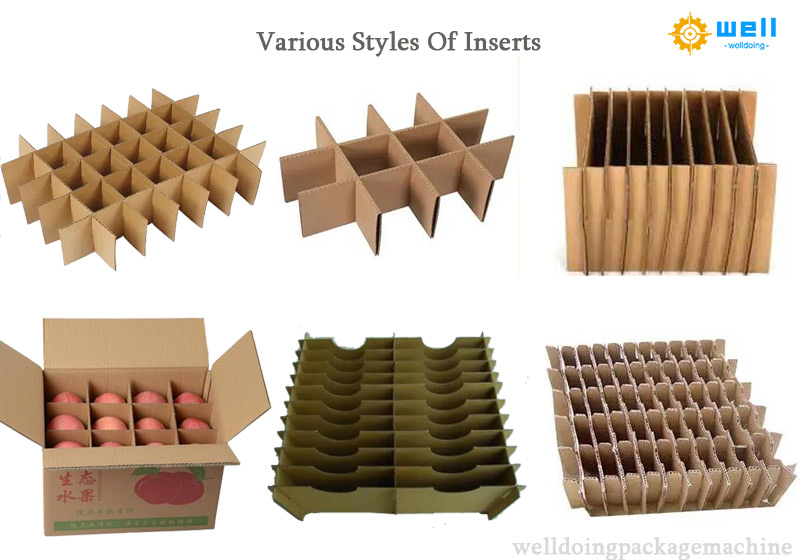
Every carton plant reaches the same crossroads, usually mid-shift, usually during a rush order: two operators are folding cell partitions on a bench, a third is gluing strips by hand, and the flexo folder gluer upstream has already stacked the outer boxes. The bottleneck is not the press, not the die-cutter, not the warehouse. It is a pile of flat corrugated blanks waiting to become a grid. That is the moment packaging manufacturers start pricing a fully auto partition assembler machine, and the reason they finally switch is rarely the one written on the ROI sheet.
The Trigger Is Line Balance, Not Labor Cost
Most buying committees open with wages, then discover wages were never the expensive part. A manual partition bench absorbs whatever the die-cutter releases, so the pile in front of it looks harmless. What it actually does is convert machine speed into inventory: printed blanks sit on pallets, glue cures unevenly, and the outer carton order waits on a station that has no schedule of its own. Add the quality tax, skewed cells, glue smears, strips inserted at the wrong depth, and the true cost per thousand partitions is two to three times the labor line on the P&L. A partition assembler machine does not make people cheaper. It removes the mismatch between a 20,000-sheet-per-hour cutter and a bench that peaks at a few hundred sets.
Six Signals the Line Has Outgrown Manual Assembly
Changeover eats the shift. A new cell layout means re-gluing, re-stacking and re-checking, so small runs quietly get quoted at large-run prices. The second shift is overtime, and the third shift does not exist. Complaints cluster on cell size and squareness rather than on print. Work-in-progress occupies more floor space than the machines. Hiring notices for bench operators stay open for months. Sales promises rush orders and production delivers them with heroics. Any three of these six is a business case, even before a single quotation is opened.
Three Levels of Automation, and What Fully Auto Should Mean
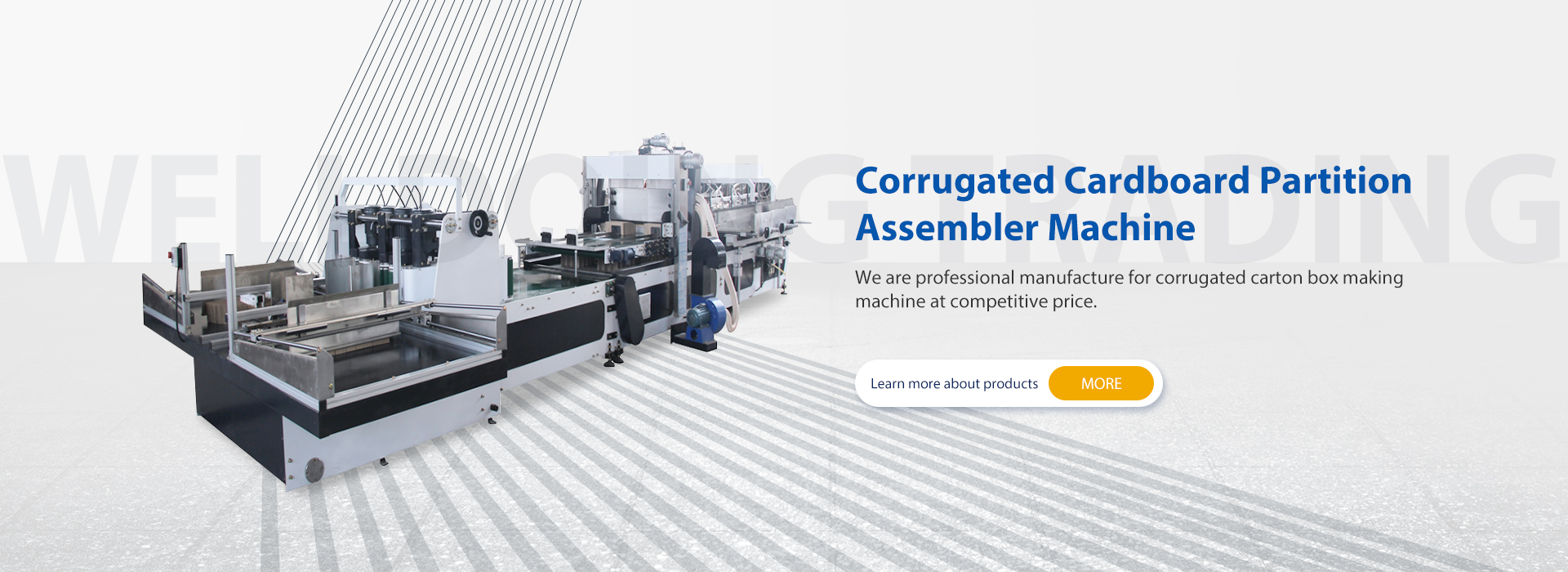
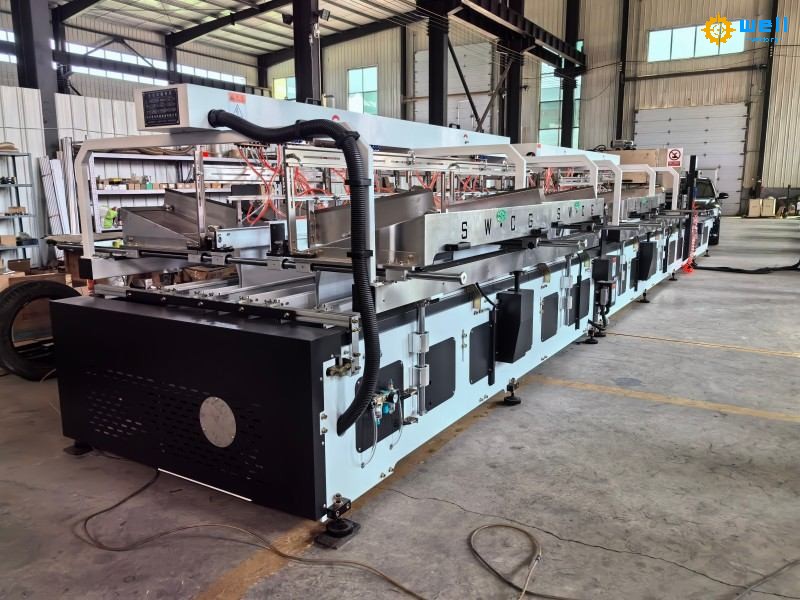
Level one is a jig, a glue gun and a bench. Level two is a semi-automatic inserting station, where an operator still feeds each strip by hand while the machine indexes the blank. Level three is genuinely automatic: strip magazine, glue applicator, insertion, rotation, compression, counting and stacking run as one cycle, and the operator loads blanks and removes bundles. When suppliers say fully auto, ask one question. Can the machine complete a partition set without a human touching a strip? If the answer is no, the labor saving is a fraction of the brochure.
The Cycle, Second by Second
A blank is picked from the magazine and located on the indexing table. Glue is applied in a programmed pattern, not a flood, so the joint holds without bleeding into the print. The strip magazine releases one board, the inserter pushes it into the slot, and the table indexes ninety degrees. The sequence repeats until the cell count is complete. The finished set is compressed, counted and stacked. Servo indexing sets the rhythm, and the glue pattern, not the machine frame, decides whether the partition survives a drop test.
The Spec Sheet Buyers Read First
Typical working ranges, to be confirmed against your own board: throughput 800 to 2,000 partition sets per hour depending on cell count and size; partition height roughly 50 to 300 mm; board thickness 1.5 to 5 mm; cell count set by recipe; changeover 5 to 20 minutes with stored recipes; cold glue standard, hot melt optional; one operator per machine plus one packer; air supply 6 to 8 bar; footprint from about 3 x 1.5 m. Treat every number as a question to ask, never as a promise to print.
What Changes on the Shop Floor in the First Week
The visible change is speed. The useful change is rhythm. Once the carton partition assembly machine sets the pace, the die-cutter stops stacking blanks “just in case”, the gluer receives outer boxes in sequence, and the pallet pattern becomes predictable enough to plan a truck. Operators stop being folders and start being inspectors, which is a better use of people who already know what a bad joint looks like. Expect two weeks of friction while recipes are tuned, then a throughput curve that looks almost flat, because the constraint has moved downstream to packing.
Payback Math That Survives Finance Review
Take 60,000 partition sets a month, three operators across two shifts, and a fully loaded labor rate of USD 6 per hour. Manual assembly at 350 sets per operator-hour consumes 171 labor hours. A partition assembler machine at 1,500 sets per hour, one operator, consumes 40 hours. The gap is 131 hours, or about USD 790 a month, which alone does not justify capital. Add glue consistency that cuts rework by 4 percent, floor space released for a second die-cutter, overtime eliminated in peak season, and one avoided chargeback, and the monthly benefit typically lands between USD 2,300 and USD 3,500. Against a 20,000 to 35,000 machine, payback runs nine to fifteen months, which is the range a finance team can sign without arguing.
Design Details That Decide Whether the Switch Sticks
Glue system. Cold glue with a nozzle pattern is cheaper to run and easier to clean than hot melt, but board grade and climate decide. Ask for a glue pattern drawing, then test it on your worst recycled board. Strip magazine. Warped board is the number one cause of stoppage on any automatic partition assembler machine. Look for a magazine that separates by vacuum or friction rather than gravity alone. Indexing. Servo tables change cell pitch from the screen, cam tables change it with tools. If your SKUs move, pay for the servo. Jam recovery. A machine that needs two technicians and forty minutes to clear a jam will be run slowly on purpose. Recipe memory and scanning. Barcode-triggered recipes remove the changeover argument entirely. Dust and trim. Corrugated dust destroys sensors and glue nozzles, so extraction is not optional.
A Ninety-Day Migration That Keeps the Plant Shipping
Days one to fifteen, audit: collect board samples, cell drawings, current cycle times and defect rates. Days sixteen to forty-five, build and factory acceptance, with your board, not the supplier’s. Days forty-six to sixty, install, level, dry run and safety validation. Sixty-one to seventy-five, dual running: the bench stays alive while operators learn recipes. Seventy-six to ninety, handover, with throughput, defect rate and changeover time measured against the baseline you wrote down in week one. Plants that skip dual running usually lose the gain in month two.
What To Verify On a Demo Floor
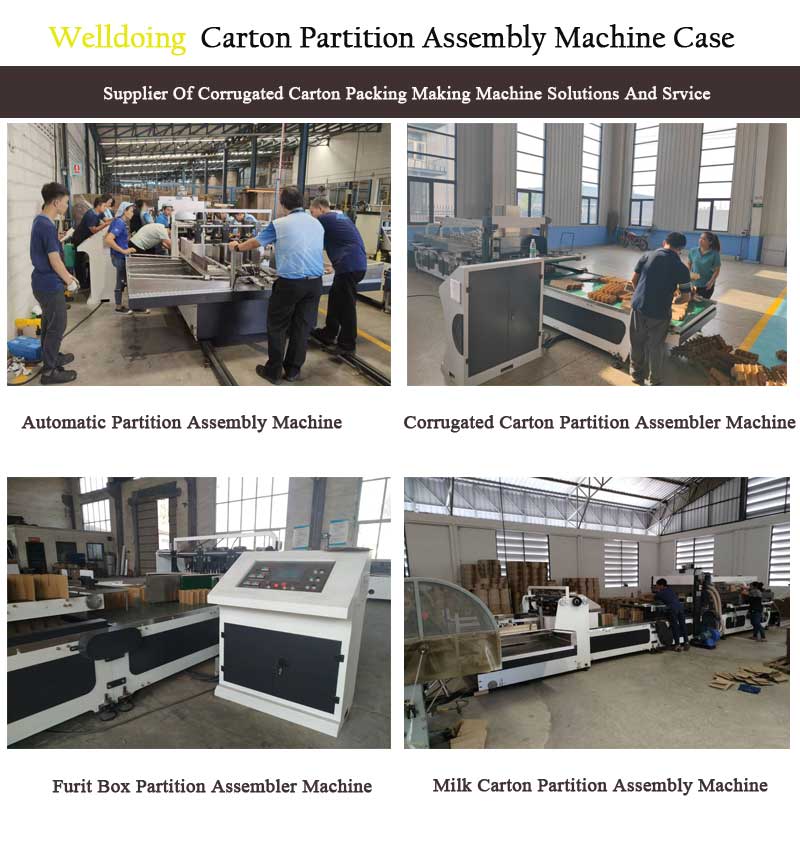
Run your own board, your own glue, your own cell layout. Watch a full changeover, timed, with a stopwatch. Deliberately feed one warped strip and see how the machine recovers. Count rejects in fifty consecutive sets. Check noise at the operator position. Ask which parts wear and what they cost per year. Ask for the electrical and pneumatic drawings before signing. Ask for two customers running the same cell count. A supplier who cannot arrange that is selling a photograph.
Three Mistakes That Turn a Good Machine Into a White Elephant
Buying for the largest partition you might someday make, then running small cells at half speed. Ignoring changeover, which converts a fast machine into a fast machine for one SKU. Skipping the consumables plan, so glue, nozzles and wear parts arrive late and the machine idles. The fix is boring and cheap: buy to the eighty percent of your volume, specify stored recipes, and put a year of consumables in the purchase order.
FAQ
How many operators does a fully auto partition assembler machine need? One to load blanks and monitor, one to pack and palletize at higher speeds.
Can it run short batches? Yes, if recipes are stored and changeover is under fifteen minutes, which is the specification worth insisting on.
Which glue is better? Cold glue for paper-to-paper joints and lower cost, hot melt where humidity or coating demands it.
Will it handle recycled board? Most machines will, at reduced speed; test your actual furnish.
What maintenance is required? Daily glue-system flush, weekly sensor cleaning, monthly wear-part inspection.
What is typical lead time? Eight to fourteen weeks plus installation, depending on configuration. Is a used partition assembler machine a shortcut? Only if the frame is sound and the recipe system still has support; wear parts and obsolete controllers usually erase the saving within a year.
The Switch Is a Line Decision
Packaging manufacturers do not buy a carton partition assembling machine because labor is expensive. They buy it because a manual bench hides a bottleneck that quietly taxes every order, every shift, every chargeback. Once the machine owns the grid, the cutter runs at cutter speed, the outer carton leaves on schedule, and the argument moves from headcount to capacity. That is the switch worth making, and the one worth writing into next year’s capital plan.
Email:cartonmachine.tomwang@aliyun.com
Phone/Wechat/Whatsapp:+86 133 0307 8975
Post time: Nov-12-2026