
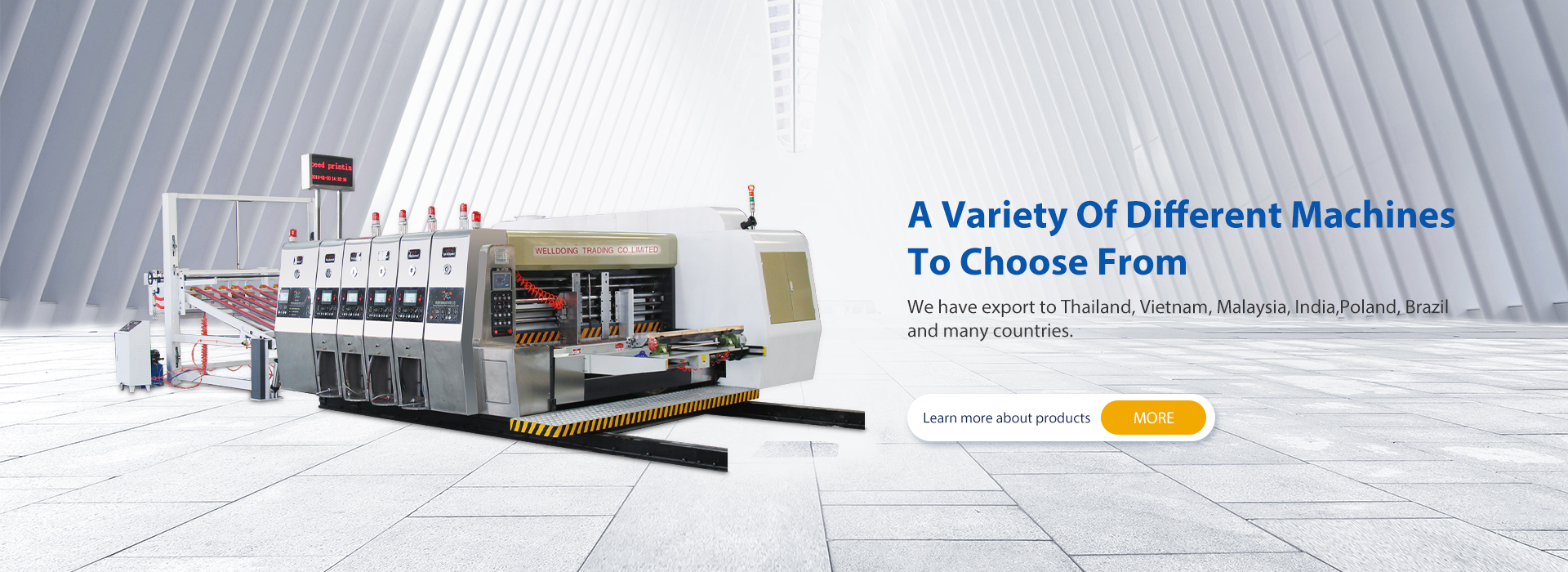
Corrugated packaging demand keeps climbing, and carton plants increasingly need equipment that prints, slots and die-cuts a sheet in one pass without committing to the capital and floor space of a fully automatic line. The Welldoing semi automatic printer slotter die cutter machine for corrugated board was designed for exactly that gap. Manual sheet feeding is paired with synchronized printing, slotting and rotary die cutting units, so a small or mid-sized factory can turn plain corrugated sheets into finished carton blanks with a modest investment and a crew of two to three operators.
What Is a Semi-Automatic Printing Slotting Die Cutting Machine
A semi-automatic printing slotting die cutting machine is an inline corrugated converting machine that combines three value-adding processes in a single frame: flexographic printing, slotting and rotary die cutting. The “semi-automatic” label refers specifically to sheet feeding. The operator places each corrugated board onto the feed table, and from that moment the machine takes over: the sheet is gripped by the feed rollers, carried through the printing units, then through the slotting station and the die cutting station, and delivered as a printed, scored, slotted and die-cut blank ready for folding and gluing.
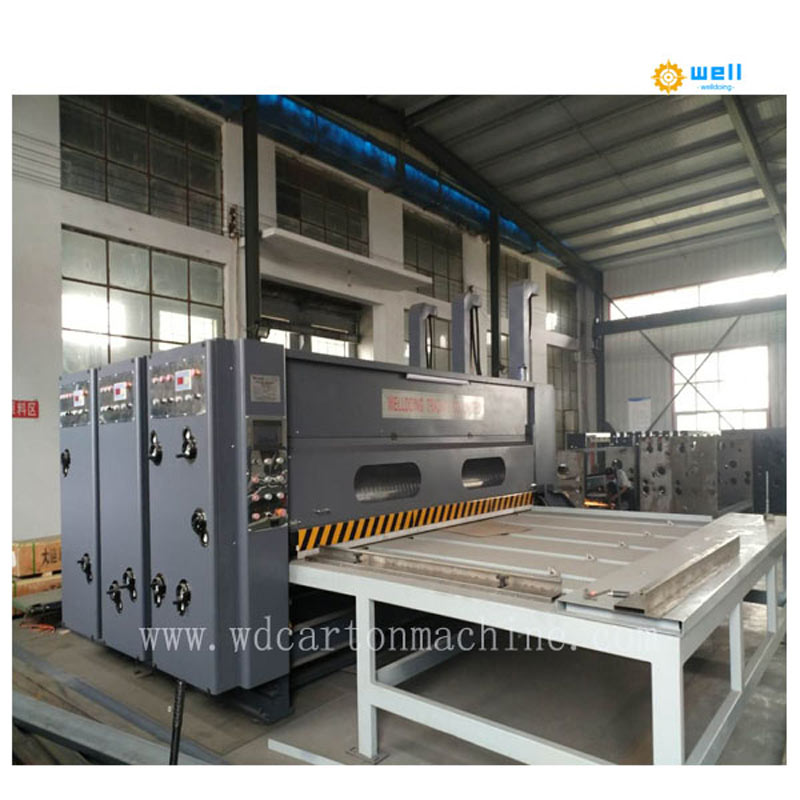
Because the machine automates every value-adding step while only the loading remains manual, buyers capture most of the productivity of a full line at a fraction of the capital cost. For plants producing regular shipping boxes, e-commerce mailers, produce cartons and display packaging in medium volumes, that trade-off is usually the correct one. The machine also consumes far less floor space than a fully automatic line of comparable width, which matters in rented workshops.
How the Machine Works, Unit by Unit
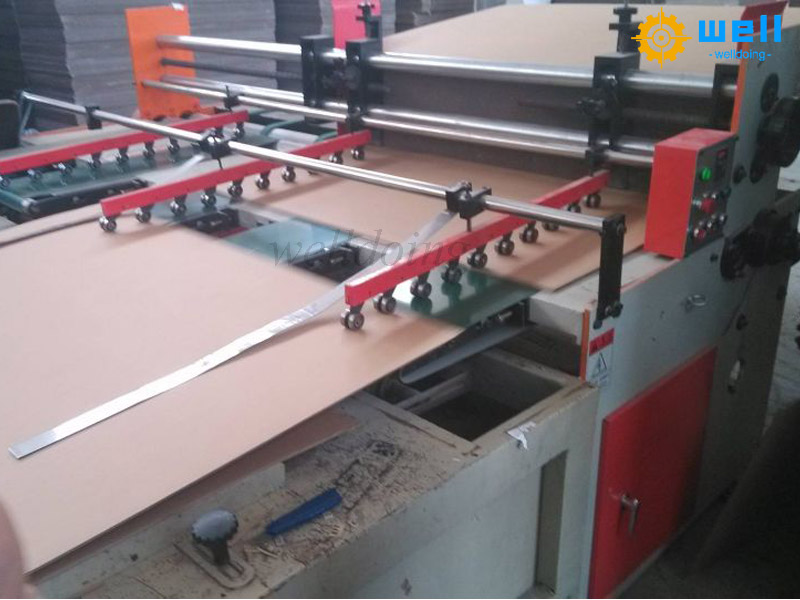
The machine is built around four sections that share one rigid frame and one drive train. The lead edge feed section uses a vacuum-assisted or kicker feed with adjustable guides, so operators can load stacks of sheets quickly and keep register stable even at higher running speeds.
The printing section carries one to four flexo units, each with a ceramic anilox roller, a chambered doctor blade, a plate cylinder and an impression cylinder. Water-based ink is metered onto the anilox and transferred to the photopolymer plate, giving clean, bright graphics on kraft, testliner and coated white top liners. Automatic ink circulation keeps ink density consistent from the first sheet to the last.
The slotting section carries four knives: two vertical scoring knives and two creasing and cutting knives. Each knife is operated through precision lead screws with dial indicators, which lets the operator set box height, width, depth and flap dimensions without trial-and-error waste.
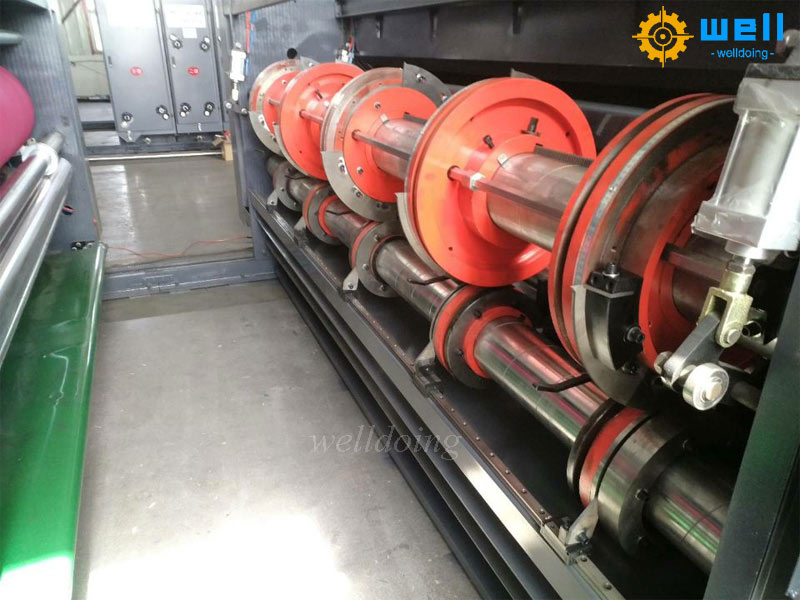
The die cutting section uses a rotary die to punch hand holes, ventilation slots, notches and custom shapes, with a rubber-covered anvil cylinder and a waste stripper that keeps trim clear of the board path. Because printing, slotting and die cutting sit in line, the sheet is handled once instead of three times, which cuts labour, work-in-progress inventory and handling damage.
Technical Advantages That Improve Carton Output
Single-pass converting is the core productivity argument. Instead of printing on one machine, transporting the stack, slotting on a second unit and die cutting on a third, the Semi-automatic ink printing slotting die cutting machine finishes the blank in one continuous cycle. Handling and waiting time drops sharply, and two operators roughly match what three separate machines formerly produced.
Register accuracy is the second advantage. Precise lead edge feeding and hardened, backlash-free gear trains hold print-to-cut register within tight tolerance, so slit positions line up with printed panels and the folder-gluer downstream runs without constant readjustment.
Fast changeover is the third. Handwheel adjustment with dial indicators and quick-release plate mounting let an experienced operator finish a size change in roughly twenty to forty minutes depending on colour count, so short runs of several box sizes per shift stay economic.
Running economy is the fourth. A typical unit is driven by a main motor in the seven to fifteen kilowatt range, uses water-based ink rather than solvent, and needs no drying tunnel. Consumables are limited to ink, plates, doctor blades and occasional anvil resurfacing.
Durability is the fifth. Welldoing builds the frame from heavy cast iron, hardens the gears and dynamically balances the rollers. That keeps vibration low, preserves register accuracy over years of two-shift operation, and holds the machine’s value in the second-hand market.
Where the Machine Fits in Real Carton Production
The semi-automatic flexo printer handles 3-ply and 5-ply corrugated board in B, C, E and BC flute, in thicknesses from roughly two to ten millimetres depending on configuration. Standard applications include regular slotted containers, e-commerce mailers, fruit and vegetable cartons with ventilation and hand holes, pizza boxes, appliance packaging and promotional display shippers that need multi-colour branding.
The realistic volume band is roughly five hundred to three thousand blanks per shift, depending on sheet size and operator skill. Below that, an outsourced printer may be cheaper. Above it, a fully automatic printer-slotter-folder-gluer line starts to pay for itself. The semi-automatic printing slotting die cutting machine is the step in between, and it is also the natural second machine for a plant that already owns a larger line and wants a flexible unit for short orders.
Specification Guide: Matching a Machine to Your Workload
Four parameters decide most purchases. Maximum sheet size sets the ceiling on the products you can run; common sizes include 1200 by 2400, 1400 by 2600 and 1600 by 2800 millimetres. Colour count decides whether you buy one, two, three or four printing units and should be set by the artwork your customers actually require. Mechanical speed indicates the design ceiling, typically sixty to one hundred twenty sheets per minute, and must be compared at the same board grade, because double-wall board always runs slower. Board thickness and flute profile decide whether the slotting and die cutting sections need reinforced knives and a heavier anvil.
Secondary points worth confirming include motorised ink wash-up, an automatic counter and stacker, a plate cylinder lifting device and the spare-parts kit shipped with the unit. Ask for a video of the machine running your actual board grade, not a demonstration sheet chosen for the camera.
Daily Operation, Maintenance and Safety
Operation is straightforward. After a size change, the operator confirms knife positions against the dial indicators, fits and registers the plates, sets ink and impression pressures, then runs a few trial sheets before full production. A trained crew reaches comfortable competence within one to two weeks.
Maintenance is organised around the ink system, the rollers and the knives. The ink circuit and anilox should be washed at the end of every shift to prevent dried ink from blocking the cells. Feed and impression rollers need periodic cleaning and pressure checks. Slotting knives should be inspected weekly for nicks, because a dull knife tears rather than cuts and produces dust. Anvil rubber should be resurfaced or replaced once the die cut edge shows a burr, and gear trains and lead screws require lubrication on the interval set out in the manual.
Safety relies on interlocked guarding over all rotating cylinders, emergency stops at each station, a low-voltage control circuit and clearly marked adjustment points that keep hands away from the nip during running. Operators should never reach into the machine while the main drive is energised, and the machine should be locked out during knife or anvil work.
Why Buyers Choose Welldoing
Welldoing manufactures the frame, the rollers and the gear trains in house rather than assembling bought-in modules, which keeps tolerances consistent and makes spare parts easy to source years after delivery. Machines are built to CE requirements for export markets, are tested with board before shipment, and ship with an operation manual, a wiring diagram, a tool kit and a recommended spare-parts list. After-sales support covers installation guidance, remote commissioning, operator training material and responsive spare-parts supply. Because the machine shares components across Welldoing’s corrugated range, a plant that later adds a folder-gluer or a rotary die cutter keeps one service routine and one supplier relationship.
Frequently Asked Questions
How many operators does the semi auto flexo printer slotter die cutter machine need? Two are enough for steady production, one feeding and one at the delivery end checking quality and stacking.
Can it print full-colour graphics? Yes, with up to four flexo units, water-based ink and well-mounted photopolymer plates. Solid brand colours, line work and multi-colour logos print cleanly and consistently.
What board grades can it run? Three-ply and five-ply corrugated in B, C, E and BC flute within the thickness range of the specific model.
How long does a size change take? Roughly twenty to forty minutes for an experienced operator, depending on colour count and how much of the knife set must be swapped.
Does it need a drying tunnel? No. The ink is water-based, so a modest compressed air supply for the feed and waste stripper is all the auxiliary service required.
Conclusion
If you are sourcing a semi-automatic printing slotting die cutting machine for corrugated box production, the deciding factors are sheet size, colour count, board grade and the volume band you honestly expect. Welldoing’s semi-automatic flexo printing slotting die cutting machine delivers balanced performance, affordable running cost and steady output in one compact frame, with the durability and service support that keep a mid-sized carton plant competitive. Send us your typical box sizes, board grades and monthly volume, and we will return a specification sheet, a running video on comparable board and a tailored quotation.
Email:cartonmachine.tomwang@aliyun.com
Phone/Wechat/Whatsapp:+86 133 0307 8975
Post time: Nov-14-2026