

Every paper core gets inspected twice. The first inspection happens in your plant, with a micrometer, a scale and a buyer who is in a good mood. The second happens inside a 40-foot container crossing the equator, and that inspector does not take notes. It just crushes.
That is the whole reason an export-grade kraft paper tube making machinery costs more than a domestic one that looks identical on the quotation sheet. Both machines wind paper into a tube. Only one of them is built to survive twenty-eight days of heat, humidity and twelve-pallet stacking before the core reaches the customer’s winder. This article is about the second kind — not as a catalogue, but as an engineering argument.
The Four Ways Export Cores Die
Before talking about the machine, be clear about what it is fighting. Over years of shipping cores to film converters, tape plants, textile mills and paper converters, four failure patterns account for almost every complaint that arrives by email from overseas.
Radial crush. Cores at the bottom of a stack carry the weight of everything above. A wound tube with a soft wall goes oval, and an oval core does not run true on a high-speed winder. The failure shows up as vibration, edge wander, or a roll that will not track.
Moisture regain. Paper is hygroscopic. A core dried to 7% moisture in a dry plant can drift to 12% inside a container crossing the Indian Ocean. When it does, the plies swell, the glue line creeps, and the core lengthens. Customers call this “telescoping,” and it is the single most common cause of rejected export lots.
Inner diameter drift. Customers specify ID to a fraction of a millimetre because their mandrel is fixed. Once ID slips, the core either will not mount or spins loose.
Ply separation. A weak glue bond holds fine in the plant and delaminates after sixty days of storage, especially at the cut edge where the knife compressed the paper.
None of these are paper problems. They are line problems: tension control, glue discipline, nip pressure, drying, and knife condition. That is exactly where a paper tube making machine earns or loses its price, one station at a time.
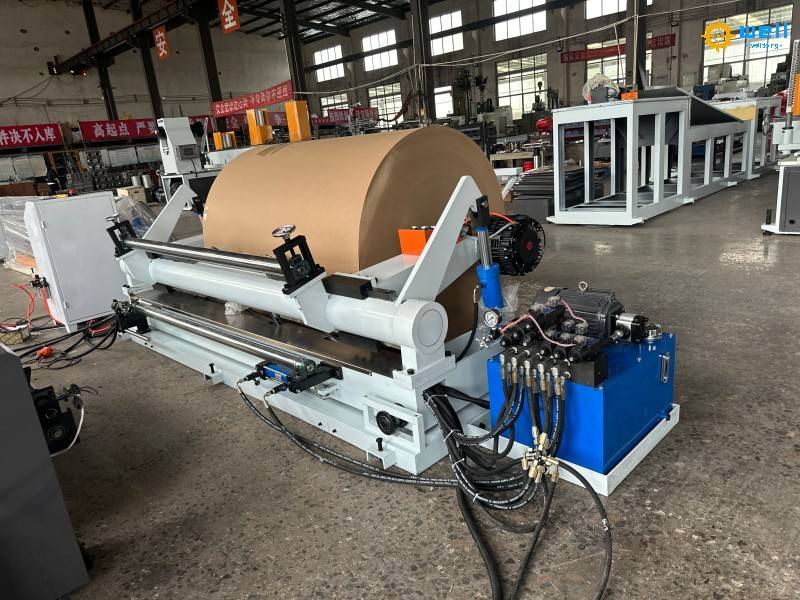
Inside a Paper Tube Making Machine: Five Stations, Five Answers
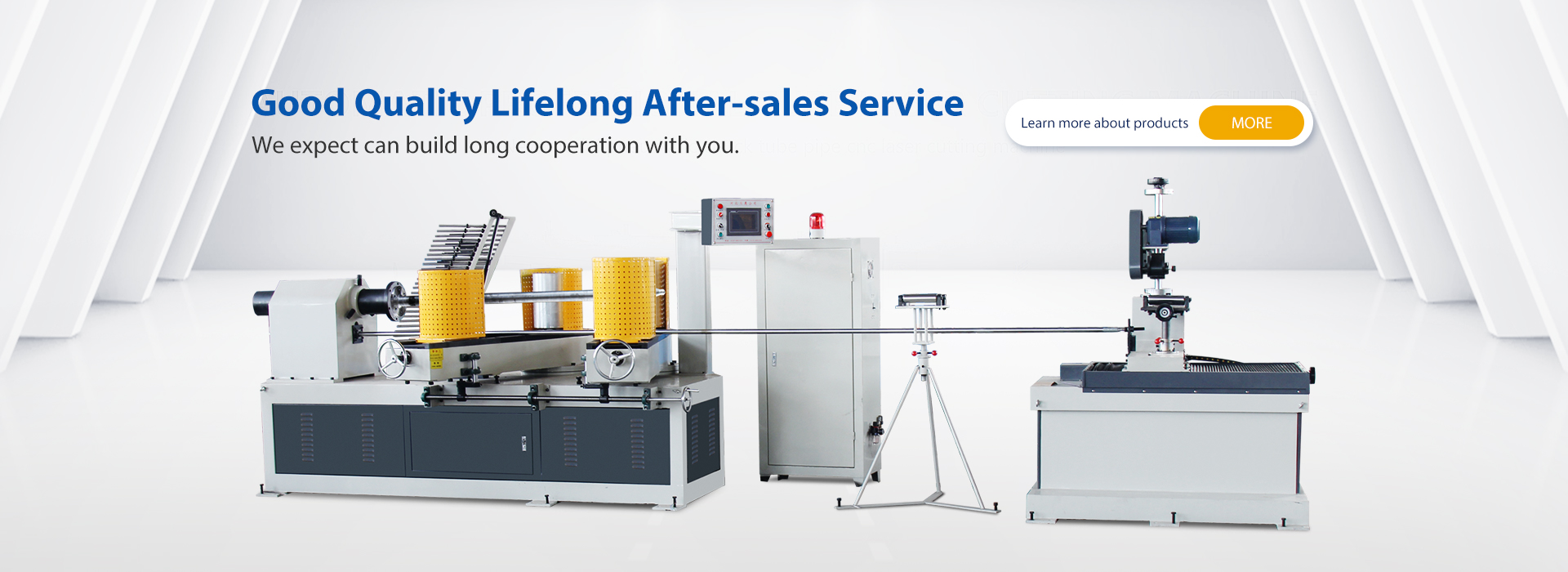
Read a paper tube making machine from the paper roll to the finished core, and each station answers one of those failures.
1. Unwinding and tension. The web must arrive at the winding belt flat and evenly tensioned. Pneumatic dancers or servo-driven unwinds give you a stable web; mechanical brake unwinds give you tension that rises as the roll gets smaller. On a two-ply core, a 15% tension swing is enough to change wall hardness from one end to the other. That core crushes at the bottom of a stack, and nobody can explain it later.
2. Glue application. Side-glue lines apply adhesive to the paper edge only, which is fast and cheap and appropriate for light cores. Full-surface or spiral glue patterns build a bonded wall that resists radial compression and delamination — the specification most export buyers actually need. Starch adhesives are inexpensive and work well in dry climates. Silicate-based systems hold better under high humidity, which is why most containers bound for tropical ports do better with them. The control point here is glue weight per square metre, and it must be held constant as line speed changes.
3. Winding and nip pressure. This is where roundness is made. Belt pressure, mandrel alignment and the speed ramp during the first three seconds determine whether the core is a cylinder or a cone. A machine with a servo-controlled winding section can hold nip pressure constant while accelerating; a purely mechanical one cannot, and its cores are round at 40 m/min and oval at 90.
4. Cutting. A dull knife does not simply cut badly — it compresses. Compressed edges read as low ply bond on the customer’s incoming test and as fuzz on their winder. Blade angle, blade life and the support of the mandrel at the moment of cut all matter, and the difference shows up only in the last centimetre of the core.
5. Drying and conditioning. Here is the step that separates an export line from a domestic one, and the one most often skipped to save cost. Cores leave the winder at 9–12% moisture. Before packing, they must reach a stable 6–8% and then be held there. A tunnel or chamber with controlled temperature, airflow and dwell time does that; a fan and a pallet does not. When a buyer in a humid market compares two suppliers, this is usually the invisible difference between a repeat order and a claim.
Add a roundness correction or re-rolling station and a proper core accumulator, and the line is complete: five answers, one product.
Specifications That Matter When the Buyer Is Far Away
Export buyers cannot walk the line, so they buy on numbers. These are the ones worth putting in a quotation, because each maps to a failure mode above.
表格
| Parameter | Typical export-grade range | Why the buyer asks |
|---|---|---|
| Inner diameter range | 25–300 mm (multi-mandrel) | Must match their existing mandrels |
| Wall thickness | 1.5–15 mm, 2–8 plies | Radial crush and roll weight |
| Line speed | 40–100 m/min, diameter dependent | Cost per core |
| ID tolerance | ±0.3 mm, better on request | Mandrel fit |
| Wall thickness tolerance | ±0.2 mm | Winder stability |
| Moisture after conditioning | 6–8% | Telescoping in transit |
| Ply bond (edge test) | No separation after 24 h soak | Humidity claims |
| Cut length tolerance | ±1 mm | Customer’s roll width |
A paper core making machine that publishes tolerances and holds them is worth more than one that publishes better tolerances and leaves them to the operator — which is why every serious paper tube making machine quotation should carry a tolerance table, signed.
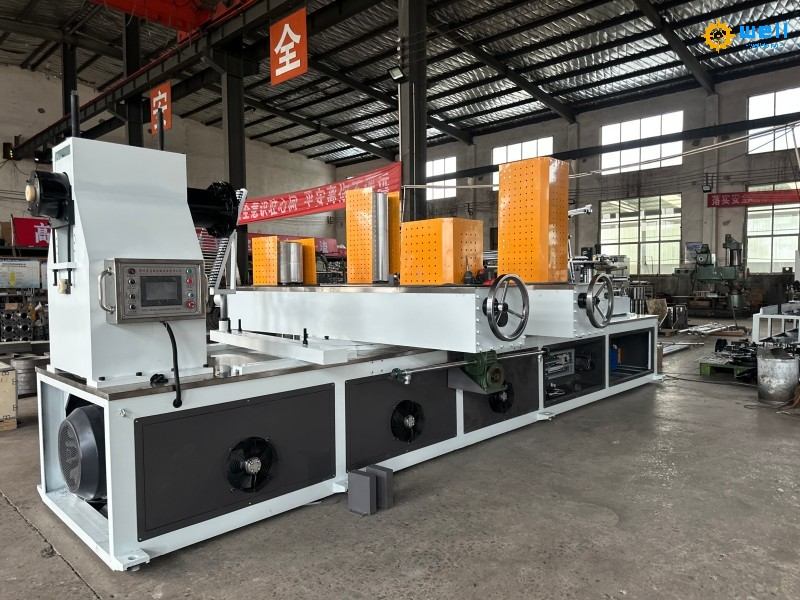
Three Configurations, Three Markets
Two-ply, side-glue, 40–60 m/min. Right for tape, label and light film cores sold regionally. Low power, low glue cost, fastest payback. Not the choice for a container going to a tropical port.
Three-ply, full-surface glue, 60–90 m/min with conditioning. This is the standard export configuration. It covers film, metallized paper and textile cores up to about 150 mm ID, and is the paper tube making machine most Welldoing buyers select when the destination sits outside their own climate zone.
Multi-ply heavy duty, 90–100 m/min, thick wall, reinforced drying. For cores above 200 mm ID, for heavy metallized film, and for customers whose winders run at film speeds that punish every millimetre of ovality.
The honest selection rule: start from the customer’s winder and their climate, not from the machine’s top speed. Top speed sells quotations. Tolerance and dryness win repeat orders.
A Pre-Shipment Protocol Worth Copying
If you build or buy an export-grade paper tube making machine, run these six checks on a sampled pallet before the container loads. They cost half a day and they replace most of the arguments that happen three weeks later by email.
- Radial compression on the bottom, middle and top core of a stacked pallet.
- Moisture reading on the core body, not the cut edge, after conditioning.
- ID and OD gauge check at both ends and the middle of each sampled core.
- Ply bond peel test at the cut edge after a 24-hour water soak.
- Ovality check, measured as the difference between maximum and minimum diameter.
- A loaded roll test: mount the core on a mandrel and run it for ten minutes at the customer’s stated speed.
Record the numbers, ship them with the cores. Buyers who receive data trust the next container more than the first.
The Arithmetic
A three-ply paper tube making machine running at 70 m/min produces roughly 700–900 cores per shift depending on length and diameter. If conditioning cuts rejects from a typical 8% to under 2%, the recovered cores alone usually repay the drying section within the first year. Add the avoided re-shipments and credit notes, and price stops being the argument.
Questions Buyers Actually Ask
Can one line make both small tape cores and large film cores? Yes, with a multi-mandrel winding section and a changeover procedure. Ask for the changeover time in writing — it is usually the real constraint, not the diameter range.
Is a Chinese paper tube making machine accurate enough for European customers? Accuracy comes from the winding section and the knife, not from the country of origin. What you should verify is the tolerance the factory is willing to guarantee in the contract, and whether they test it in front of you.
How much floor space and power? A standard three-ply export line typically needs 15–25 m of length, and 30–50 kW installed depending on drying. Confirm both against your building before you discuss price.
What about spare parts and service? Ask for the knife, belt and mandrel wear items, their lead time, and whether a technician can be on site for commissioning. A line shipped without commissioning support gets blamed for every early failure.
What to Do Next
Send us your target core diameters, wall thicknesses, destination market and the winder speed your customers run. Welldoing will return a line configuration, a guaranteed tolerance list and a conditioning specification matched to the climate the container will cross — not a speed figure on a glossy page. A automatic paper core tube making machine is a twenty-year decision, and the only inspection that matters is the one that happens after the container arrives.
Email:cartonmachine.tomwang@aliyun.com
Phone/Wechat/Whatsapp:+86 133 0307 8975
Post time: Nov-13-2026