

Printing and packaging manufacturers around the world keep facing a stubborn, costly headache: high chroma ink wastewater from flexo presses, plate washing, roller cleaning and workshop floor rinsing. Water-based inks, pigment dyes, acrylic binders, surfactants and fine colloidal particles create strongly coloured effluent that simple sedimentation tanks or basic chemical dosing cannot reliably clear. Dark, persistent colour, fluctuating COD levels and poor biodegradability frequently trigger environmental audit risks, heavy third-party hauling fees and production downtime for packaging converters. This case study shares how our custom ink printing wastewater treatment machine delivered stable decolorization, consistent discharge compliance and lower running costs for a mid-sized packaging factory producing flexible packaging, cartons and printed laminates.
The customer operates a full-colour packaging printing plant with multiple flexographic printing lines. Every production shift generates continuous ink wastewater when operators wash printing cylinders, clean doctor blades and flush ink circulation pipelines. Before the upgrade, the factory relied on a conventional single-stage coagulation tank. The old setup could remove only part of the suspended solids. After treatment, the outlet water remained visibly dark with unstable chroma values. On busy production days with frequent colour changes, pigment loads spiked sharply, overwhelming the basic treatment process. Local sewer authority limits became hard to maintain. The factory had to arrange emergency wastewater tanker disposal regularly, which pushed up monthly operating expenses and exposed the business to non-compliance penalties. The management team also wanted to reduce sludge output and cut chemical consumption, goals that traditional wastewater solutions struggled to meet.
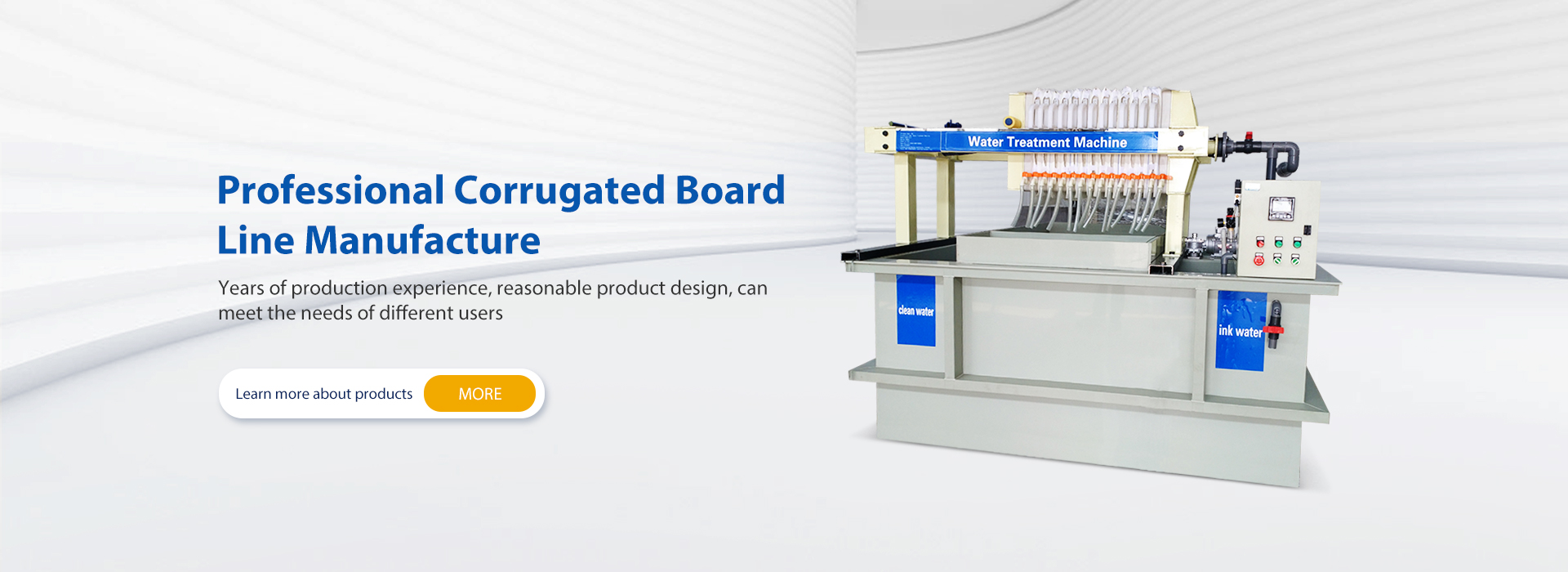
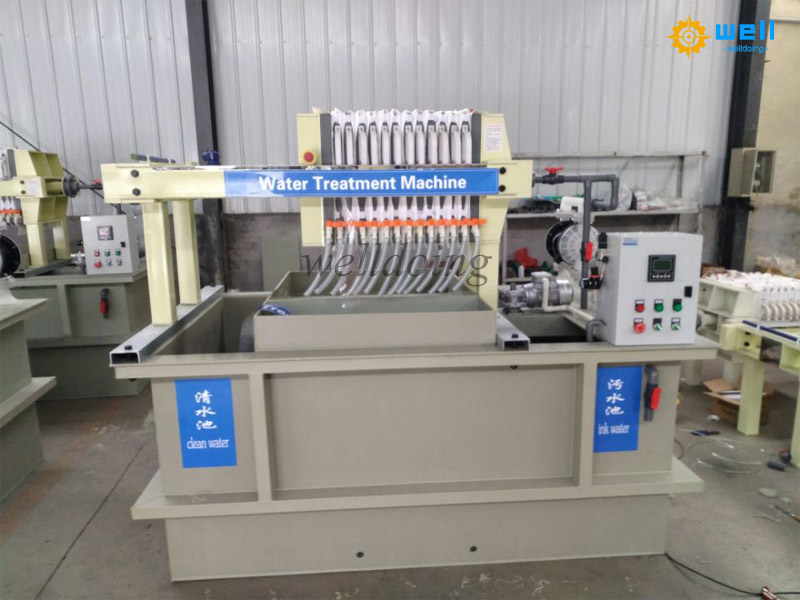
After site sampling, effluent testing and production schedule analysis, our engineering team designed a tailored flexo ink printing wastewater treatment system workflow built around dissolved air flotation (DAF), advanced decolorization reaction, biochemical treatment and fine filtration. The whole line runs under automatic PLC control, with real-time pH monitoring, chemical dosing adjustment and sludge dewatering integrated into one compact skid-mounted system. Raw ink wastewater first flows into a pre-treatment equalization tank, where flow rate and pollutant concentration are stabilized to buffer sudden load shocks from colour change cleaning cycles. Next, pH is adjusted before targeted flocculation and decolorant injection. Pigment colloids and colour-forming organics agglomerate into dense flocs. The mixture enters the DAF unit, where micro air bubbles lift ink flocs to the surface for fast skimming. Most chroma and suspended solids are removed in this core stage.
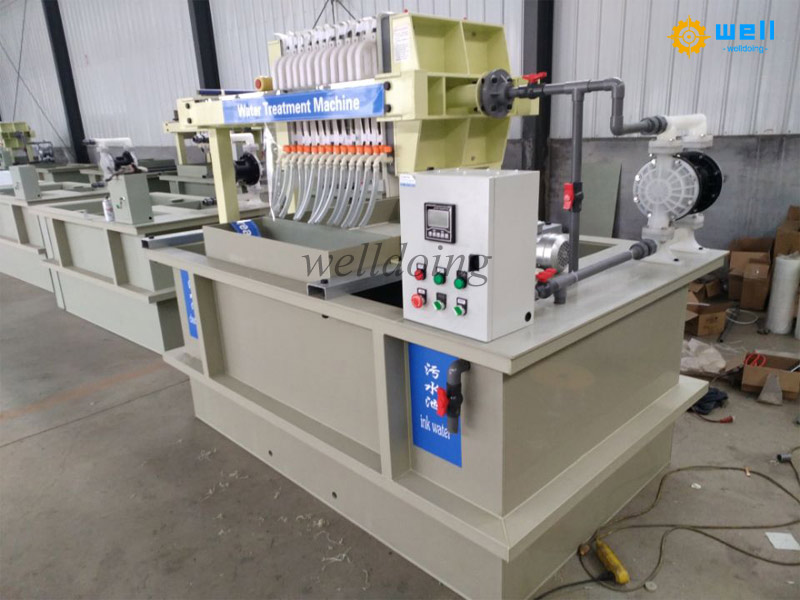
Pre-clarified water then moves to the biochemical tank to break down soluble organic compounds and reduce COD. A final polishing filter and activated carbon adsorption stage capture residual trace pigments and dissolved colour substances, locking in stable clear effluent quality. Separated ink sludge is sent to the automatic filter press for dewatering. Dewatered sludge cake is reduced in volume drastically, cutting hazardous waste transportation and disposal costs. The system is built for packaging plant environments: it occupies a small footprint, fits alongside existing printing machines and requires minimal manual operation. Operators only need to check daily status reports on the touchscreen panel.
Once commissioned and tuned for the factory’s ink formula mix, the ink wastewater treatment system delivered outstanding and repeatable results. The chroma removal rate reaches above 98%. The previously dark, inky outlet water turns transparent and clear. COD, SS and colour indicators stay steadily within local discharge standards even during peak production periods with frequent press washdowns. Third-party tanker disposal volume dropped by more than 70%, removing the biggest variable cost in the plant’s environmental budget. Compared with their old simple treatment setup, overall chemical consumption decreased, and total sludge generation fell significantly. The factory eliminated unexpected compliance risks and no longer paused printing runs to handle wastewater emergencies.
Beyond numbers, the solution brought hidden commercial benefits for this packaging printer. Many brand owners sourcing food packaging and retail cartons now audit suppliers for sustainability credentials. Stable, transparent wastewater treatment helps the factory pass customer ESG audits and win more long-term packaging orders. The automatic design also reduces reliance on skilled wastewater technicians. The system logs all running data continuously, making compliance reporting simple and audit-ready. Because the process is modular, it can scale easily if the packaging factory adds new printing presses or expands production capacity later.
Packaging and flexo printing businesses often underestimate how much high chroma ink wastewater limits growth. Generic wastewater equipment works well for domestic or general industrial water, but ink wastewater with stable pigment colloids needs special decolorization logic and anti-shock load design. Many suppliers sell standard tanks and pumps without understanding flexo ink properties, leading to weak colour removal, unstable performance and wasted investment. This case proves that a purpose-built flexographic ink wastewater treatment system focused on chroma removal is the most practical path for packaging converters. It balances compliance, operating cost, labour input and future expansion.
For packaging factories struggling with dark ink wastewater, failed colour tests, expensive waste hauling or inconsistent effluent quality, this proven treatment model offers a clear roadmap. Our team provides full turnkey support: on-site water testing, process simulation, custom layout, manufacturing, installation, commissioning and after-sales technical guidance. Whether you run small carton printing lines or large flexible packaging converters with multiple flexo machines, we can configure an ink wastewater treatment system matched to your water volume, ink types and local discharge rules. Stop letting high chroma ink wastewater slow down your printing production and threaten your compliance record.
Email:cartonmachine.tomwang@aliyun.com
Phone/Wechat/Whatsapp:+86 133 0307 8975
Post time: Nov-25-2026